
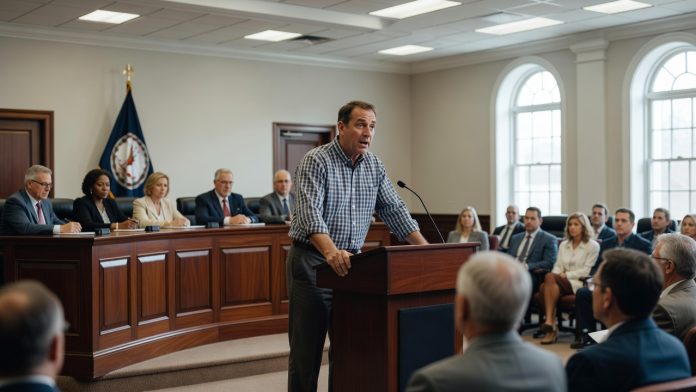
During a recent legislative hearing in Virginia, a resident provided testimony regarding restrictions on carrying firearms in certain public locations. The speaker described how laws designating stores and rest areas as sensitive zones require individuals to leave their firearms outside these spaces. This requirement was presented as creating potential vulnerabilities for those who hold permits. The testimony emphasized the daily implications for citizens who travel or conduct routine activities in these areas. Officials listened to accounts of how such policies influence personal security decisions.
Details from Citizen Testimony
The presentation outlined specific challenges associated with sensitive place designations under current regulations. Individuals must comply by not bringing firearms into rest stops or retail environments. The speaker noted that this leaves people without their usual means of protection during stops or shopping trips. Examples included situations where compliance might increase exposure to risks. The hearing allowed for direct input on these operational aspects of the law.
Further comments addressed the broader category of sensitive zones and their impact on permit holders. The testimony pointed to rest areas as particularly relevant for travelers who might encounter unexpected situations. Stores were similarly highlighted as locations where everyday activities occur without access to defensive tools. The speaker advocated for adjustments that would permit carry in these settings. This input contributes to ongoing discussions about policy effectiveness.
Focus on Self-Protection Considerations
The resident shared perspectives on how restrictions affect women and other groups who prioritize personal safety measures. Forcing the removal of firearms upon entry was described as limiting options in potential threat scenarios. The testimony suggested that reevaluation of these rules could address such concerns. Lawmakers received information on the practical effects experienced by citizens. The session provided a forum for examining these elements of Virginia firearm regulations.
Additional context covered the speaker’s personal circumstances and reliance on consistent carry practices. The neck brace worn during the testimony was visible as part of the public record of the event. Discussions remained centered on the policy implications rather than individual details. This approach kept the focus on statutory considerations for sensitive zones. Input from multiple participants added to the record of views presented.
House Bill 696 and Related Legislative Matters
Reference was made to House Bill 696 in connection with debates over sensitive place policies. The bill pertains to regulations governing where permitted carry is allowed in Virginia. Testimony contributed to the body of information available to legislators reviewing the measure. The hearing format allowed for structured presentation of citizen experiences with the current framework. Outcomes may influence future considerations of zone designations.
The overall session reflected standard procedures for gathering public comment on proposed or existing laws. Emphasis stayed on factual descriptions of how restrictions operate in practice. Rest areas and stores were consistently identified as key examples in the testimony. This helped illustrate the scope of affected locations across the state. Continued review processes will incorporate such contributions.
Implications for Policy Review
The testimony concluded with a request for lawmakers to examine the results of sensitive zone rules. Officials were encouraged to consider how these policies align with goals of public safety. The hearing represents one step in the legislative process for addressing firearm-related statutes. Input gathered informs deliberations on potential modifications. Future sessions may build on the points raised during this event.