The state of Virginia is embarking on a massive expansion of state bureaucracy to establish a fully regulated recreational marijuana marketplace under the forthcoming biennial budget. Governor Abigail Spanberger recently announced a compromise to launch retail sales by July 1, 2027, ending a five-year period where adult possession was legal but retail sales were not. However, this new initiative comes with a hefty price tag for taxpayers, allocating tens of millions of dollars to build a new regulatory framework from the ground up. Fiscal conservatives are raising alarms over the upfront costs and the potential for government waste before a single dollar of revenue is ever collected by the state treasury.
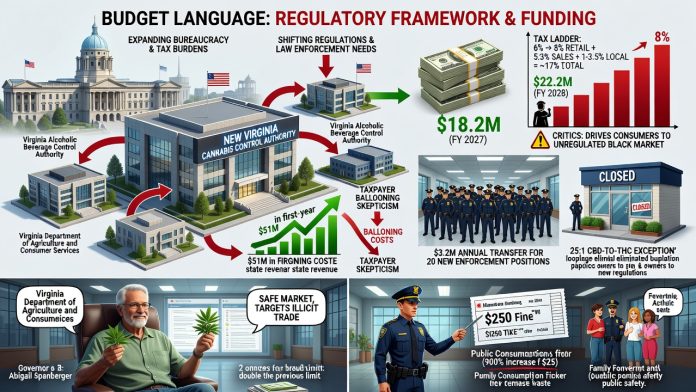
The approved fiscal framework for the 2026-2028 biennial budget commits heavily to funding this new sector through Non-General Fund allocations. Specifically, the budget mandates spending $18.2 million in fiscal year 2027 to jumpstart the retail implementation, followed by another $22.2 million in fiscal year 2028. These significant expenditures will cover the administrative costs of launching the marketplace, capping retail stores at 350 locations, and establishing the permanent Virginia Cannabis Control Authority. Critics argue that pouring over forty million dollars into a newly invented government agency creates ripe opportunities for bureaucratic bloat and unchecked overspending that taxpayers simply cannot afford.
Expanding Bureaucracy and Tax Burdens
When the retail market opens, consumers will face a steep ladder of taxation that could ultimately undermine the legal marketplace and sustain illicit operators. The state will impose a retail tax starting at six percent, which is statutorily scheduled to increase to eight percent on July 1, 2029. This new marijuana tax comes in addition to the existing 5.3 percent state sales tax and an allowable local tax ranging from one to 3.5 percent. With total taxes potentially reaching nearly 17 percent, conservative analysts warn that excessive taxation will simply drive consumers back to the untaxed, unregulated black market.
Proponents of the legislation claim the new retail sector will generate approximately $51 million in state revenue during the program’s first year of operation. To protect this projected revenue stream, the state is transferring $3.2 million annually from marijuana profits to the Virginia Alcoholic Beverage Control Authority. This massive funding transfer will be used to hire twenty new enforcement positions tasked with cracking down on illegal sales across the Commonwealth. Expanding law enforcement to target the black market is necessary, but taxpayers remain skeptical that the projected revenues will actually cover the ballooning costs of these new state employees.
Shifting Regulations and Law Enforcement Needs
The legislative compromise also dramatically restructures how the state handles existing agricultural and consumer products related to cannabis. The Virginia Department of Agriculture and Consumer Services will be forced to transfer its current hemp oversight duties and employees directly to the newly formed cannabis authority. Furthermore, the state is closing a long-standing loophole by eliminating the twenty-five to one CBD-to-THC exception effective August 15, 2026. This sudden regulatory shift will render many previously legal intoxicating hemp products illegal, forcing small business owners to navigate a confusing and costly new legal landscape while increasing the burden on the Virginia State Police and the Office of the Attorney General.
As the state prepares for retail sales, lawmakers are simultaneously relaxing possession laws while increasing penalties for public nuisance violations. The legal possession limit for adults will double from one ounce to two ounces, a move that troubles family advocates concerned about public safety and community standards. Conversely, the civil fine for public consumption will skyrocket from $25 to $250, representing a massive 900 percent increase aimed at maintaining public order and generating minor revenue. Governor Abigail Spanberger praised the effort, stating the compromise will create a safe market that targets the illicit trade with clear enforcement and regulatory authority.
The journey to a retail market has been highly contested, with former Governor Glenn Youngkin previously vetoing standalone bills that lacked rigorous safety and fiscal controls. State Senator Lashrecse Aird recently defended the new budget language, arguing that leaving the illicit market to fill the gap left by the 2021 legalization of possession was a failure of governance. She insists this new framework provides a smarter path forward that protects consumers, ensures products are accurately labeled, and keeps the market competitive. Nevertheless, taxpayers must carefully watch this sweeping initiative to ensure the promised revenues do not evaporate into a maze of government fraud, waste, and endless bureaucratic expansion.
Email the Senate At:
Lashrecse Aird – senatoraird@senate.virginia.gov,
Lamont Bagby – senatorbagby@senate.virginia.gov,
Elizabeth Bennett-Parker – senatorbennett-parker@senate.virginia.gov,
Jennifer Boysko – senatorboysko@senate.virginia.gov,
Jennifer Carroll Foy – senatorcarrollfoy@senate.virginia.gov,
Luther Cifers – senatorcifers@senate.virginia.gov,
Christie Craig – senatorcraig@senate.virginia.gov,
Creigh Deeds – senatordeeds@senate.virginia.gov,
Bill DeSteph – senatordesteph@senate.virginia.gov,
Danny Diggs – senatordiggs@senate.virginia.gov,
Tara Durant – senatordurant@senate.virginia.gov,
Barbara Favola – senatorfavola@senate.virginia.gov,
Timmy French – senatorfrench@senate.virginia.gov,
Travis Hackworth – senatorhackworth@senate.virginia.gov,
Christopher Head – senatorhead@senate.virginia.gov,
Michael Jones – senatorjones@senate.virginia.gov,
Emily Jordan – senatorjordan@senate.virginia.gov,
Mamie Locke – senatorlocke@senate.virginia.gov,
Louise Lucas – senatorlucas@senate.virginia.gov,
David Marsden – senatormarsden@senate.virginia.gov,
Ryan McDougle – senatormcdougle@senate.virginia.gov,
Jeremy McPike – senatormcpike@senate.virginia.gov,
Tammy Mulchi – senatormulchi@senate.virginia.gov,
Mark Obenshain – senatorobenshain@senate.virginia.gov,
Mark Peake – senatorpeake@senate.virginia.gov,
Stella Pekarsky – senatorpekarsky@senate.virginia.gov,
Russet Perry – senatorperry@senate.virginia.gov,
Todd Pillion – senatorpillion@senate.virginia.gov,
Bryce Reeves – senatorreeves@senate.virginia.gov,
Danica Roem – senatorroem@senate.virginia.gov,
Aaron Rouse – senatorrouse@senate.virginia.gov,
Saddam Salim – senatorsalim@senate.virginia.gov,
Kannan Srinivasan – senatorsrinivasan@senate.virginia.gov,
William Stanley – senatorstanley@senate.virginia.gov,
Richard Stuart – senatorstuart@senate.virginia.gov,
Glen Sturtevant – senatorsturtevant@senate.virginia.gov,
David Suetterlein – senatorsuetterlein@senate.virginia.gov,
Scott Surovell – senatorsurovell@senate.virginia.gov,
Schuyler VanValkenburg – senatorvanvalkenburg@senate.virginia.gov,
Angelia Williams Graves – senatorwilliamsgraves@senate.virginia.gov,