
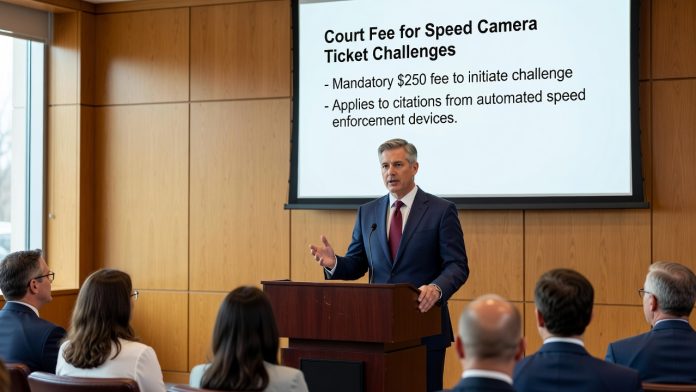
Senator Mark Peake addressed the Senate regarding the process for contesting tickets issued by speed cameras. He explained that a mandatory court fee of two hundred fifty dollars must be paid to initiate a challenge. This requirement applies to citations from automated enforcement devices. The statement focused on the procedural aspects of handling such matters in Virginia courts.
Details of the Court Challenge Process
The fee represents an additional expense beyond the original ticket amount for those seeking a hearing. Senator Mark Peake described it as part of the system for speed or red light camera violations. Individuals must cover this cost before their case can be considered by a judge. The procedure aims to manage the volume of contested tickets in the judicial system.
Local governments operate these camera programs to monitor traffic compliance. The associated fees contribute to the overall cost structure of enforcement. Senator Mark Peake provided examples of how the fee functions in practice during his remarks. This information helps clarify the steps involved for affected drivers.
Context of Traffic Enforcement Policies
Speed camera initiatives have been adopted by various localities as tools for promoting road safety. Senator Mark Peake noted the financial elements tied to contesting the resulting citations. The two hundred fifty dollar fee serves as a standard requirement in these instances. Discussions around these policies often include considerations of both enforcement effectiveness and administrative costs.
The system allows for court review but includes this upfront payment. Senator Mark Peake presented the details in a legislative setting to highlight the mechanics. Virginia residents encounter these processes when dealing with automated traffic violations. The approach reflects current practices in handling such cases.
Implications for Drivers and Localities
Drivers face the decision of whether to accept the ticket or proceed with the fee to contest it. Senator Mark Peake outlined how the fee integrates into the broader framework of traffic ticket adjudication. Localities collect revenue from both fines and related court costs. This structure influences the number of challenges brought forward in court.
The topic connects to ongoing evaluations of automated enforcement effectiveness. Senator Mark Peake referenced the constitutional aspects in relation to access to judicial proceedings. Further review by state officials may examine the balance of these elements. The information shared contributes to public understanding of the ticket contest process.