
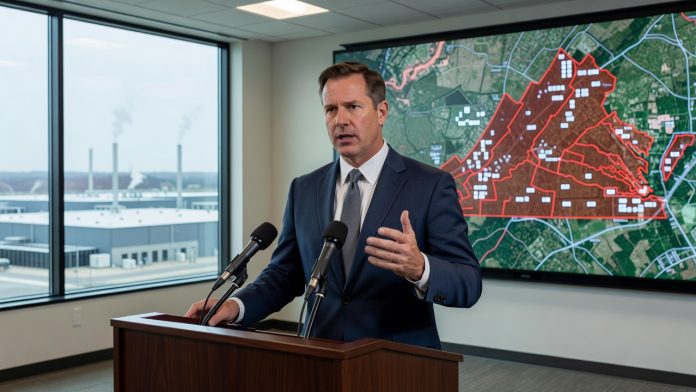
Loudoun Supervisor Mike Turner recently spoke about changes in how data center zoning decisions are being handled at the state level rather than locally. The discussion focuses on a shift where higher government bodies are assuming more control over these matters. This development has prompted questions about the balance between state and local responsibilities in land use planning.
Data centers represent a significant form of development that affects infrastructure needs and community planning in areas like Loudoun County. Turner described the situation as a trend that warrants attention from local officials and residents alike. The process of zoning has traditionally involved input from county boards to address specific regional conditions.
Background on the Zoning Shift
Zoning authority has historically rested with local governments to allow for decisions based on community specific factors. Recent actions at the state level appear to be altering this dynamic in relation to data center projects. Mike Turner outlined how this could influence future development patterns in the region.
The topic involves considerations of economic benefits alongside potential strains on local resources. Discussions of this nature often include examinations of how different levels of government interact on policy matters. Local control mechanisms have been used in the past to manage similar large scale projects.
Implications for Local Decision Making
The statements from Turner highlight ongoing conversations about authority in zoning processes. State involvement can introduce standardized approaches that may or may not align with varying local circumstances. County supervisors like those in Loudoun continue to engage with these issues as they arise.
Residents and officials monitor such trends to understand their effects on planning and governance. The focus remains on ensuring that zoning frameworks support orderly development while addressing community concerns. Information shared in public forums contributes to broader awareness of these policy evolutions.
Further observations from local leaders indicate that the trend involves multiple jurisdictions facing similar pressures. Data center growth has accelerated in recent years leading to increased scrutiny of related regulations. The role of state governments in these areas continues to be a subject of examination by county boards.
Email the Loudoun County Board of Supervisors at:
Phyllis Randall (Chair, At-Large) – Phyllis.Randall@loudoun.gov,
Mike Turner (Vice Chair, Ashburn District) – Mike.Turner@loudoun.gov,
Juli Briskman (Algonkian District) – Juli.Briskman@loudoun.gov,
Sylvia Glass (Broad Run District) – Sylvia.Glass@loudoun.gov,
Caleb Kershner (Catoctin District) – caleb.kershner@loudoun.gov,
Matt Letourneau (Dulles District) – Matt.Letourneau@loudoun.gov,
Kristen Umstattd (Leesburg District) – Kristen.Umstattd@loudoun.gov,
Laura TeKrony (Little River District) – Laura.TeKrony@loudoun.gov,
Koran Saines (Sterling District) – Koran.Saines@loudoun.gov