
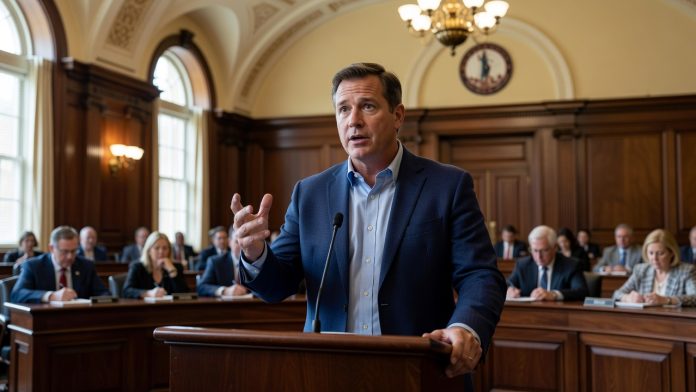
James Hemmings presented testimony at a Virginia State Senate session addressing a bill related to constitutional carry. He indicated support for the legislation by raising questions about the effects of gun-free zone designations. Hemmings described how these zones might influence personal security in everyday settings.
The remarks centered on experiences in Fairfax where restrictions through signage were noted. Hemmings observed that such measures could lead to vulnerable situations for individuals passing through the area. He explained that the inability to carry a firearm in certain places creates potential concerns for safety. The testimony remained focused on these observed dynamics without additional elaboration.
Sub-headings covering the topic of restrictions help organize the key points from the hearing. Hemmings stated that a sign alone imposes limitations that affect preparedness. He connected this to the idea of constitutional carry as a response to those limitations. The presentation stayed within the bounds of personal observation during the session.
Additional context in the testimony addressed fairness in policy application. Hemmings remarked that the current setup appears unfair in places where carry would otherwise be possible. He linked this observation to the bill under consideration. The input provided a resident perspective on how these rules operate in practice.
The session included references to specific locations and their implications for residents. Hemmings noted that being able to carry would change the nature of those environments. This point was presented as part of the overall support for the measure. The testimony concluded with an expression of thanks to the panel.
Throughout the remarks the emphasis stayed on the relationship between signage and perceived vulnerability. Hemmings described the zones as creating conditions that warrant review through legislation. The statements aligned with the hearing’s focus on self-defense considerations. No other events or details were introduced beyond what was shared directly.
The testimony contributed to the ongoing discussion in the Senate regarding these policies. Hemmings wrapped up by reiterating the core concerns raised during his time. This format allowed for a structured presentation of resident views on the bill.